



Electromechanical vs Hydraulic Bollards: What’s the Difference?
If you’re thinking about installing electric automatic bollards to secure your driveway, business or car park, you’ll likely come across two main types: electromechanical and oil hydraulic. But what is the difference?
Both types of automatic bollards provide the same level of access control, raising and lowering at the touch of a button, or even when presence is detected However, the mechanisms behind the movement are quite different, and understanding these differences can help you choose the right solution for you.
What are electromechanical bollards?
Electromechanical, or simply mechanical, bollards are powered by an electric motor and a mechanical drive system which raises and lowers the bollard. These are a popular choice for residential driveways and private parking areas where convenient, automated access control is required. They are often a practical option for customers looking for automatic bollards for driveways. Due to their fluid-less system, they often require less maintenance and can be more reliable, though they’re still susceptible to electronic and wiring failures.
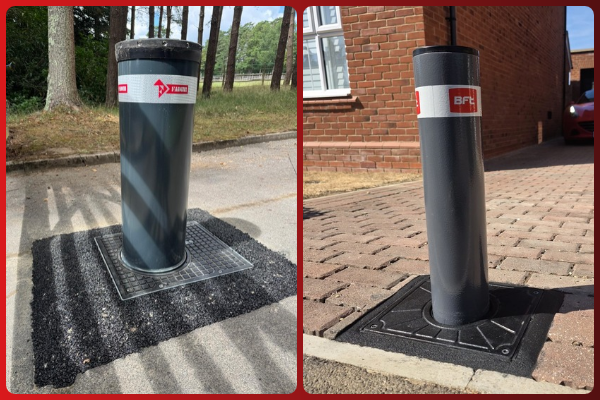
A popular choice for an electromechanical bollard is the BFT Stoppy B range. These are available in both 500mm and 700mm heights with a choice of stainless steel or painted steel finishes.
Benefits of electromechanical bollards
Convenient operation: Can be controlled using remote, mobile apps, detection loops or compatible access control systems.
Versatility: Suitable for domestic driveways, commercial entrances and controlled parking areas.
Straightforward operation: Motor-driven movement without a separate hydraulic pump mechanism.
Flexible access: Can be integrated with other security and traffic management equipment.
What are oil-hydraulic bollards?
Unlike electromechanical systems, oil-hydraulic, or just hydraulic, bollards use pressurised hydraulic fluid to power the movement, similar to a lot of modern vehicles’ braking and steering systems. An electric motor drives the pump, which transfers pressure through the system to raise or lower the bollard.
Hydraulic systems are widely used in many commercial and industrial environments, particularly where frequent operations are required. They are often a good fit for tough environments, but leaks and worn parts can cause failures which require regular maintenance.
Popular examples of hydraulic bollards are the Fadini Coral, Viglio and Talos ranges. These come in a variety of heights, finishes and optional High Resistance Cylinder models to suit various conditions.
Key Benefits of Hydraulic Bollards
High-frequency use: Hydraulic systems are often built for thousands of operations per day and with faster raising/lowering times
Heavy-duty construction: Many models are built for intensive use and frequent vehicle movements.
Flood risk: Better option for environments with a high water table or susceptible to flooding due to the location of the motor components.
Security options: Available in robust designs intended to resist unauthorised vehicle access.
Electromechanical vs Hydraulic Bollards: Key Differences
Although both systems provide automated vehicle access control, their internal mechanisms and typical applications differ.
| Feature | Electromechanical | Hydraulic |
| Operating mechanism | Electric motor and mechanical drive | Electric motor and hydraulic pump |
| Typical applications | Driveways, car parks and commercial entrances | Residential, commercial, industrial and high-security locations |
| Operating frequency | Between 500 and 1,500 uses per day | Up to 2,000 uses per day |
| Raising speed | From 6-9 seconds (height dependent) | From 2.8 – 7.7 seconds (height dependent) |
| Cold weather operation | Often not impacted by colder temperatures | Temperature can affect oil thickness and slow down movements. |
| Maintenance | Regular maintenance recommended | Regular maintenance recommended |
| Cost | Cheaper upfront cost, though still requires regular maintenance | Higher upfront cost, but higher cycle capacity may make them more economical |
| Security | Neither technology is automatically more secure than the other. | Neither technology is automatically more secure than the other. |
| Flood risk | The motor is typically near the bottom, so it is more susceptible to sitting in standing water. | Most components are located at the top of the unit, reducing their exposure to standing water. |
Which Automatic Bollards are Best for Driveways?
For homeowners looking to improve their driveway security, electric bollards for driveways offer a convenient way to control vehicle access without leaving the car.
Most systems are operated by a handheld remote, allowing access only to those with a fob and then rising again once the vehicle has passed. This is more beneficial than telescopic bollards for those who cannot safely stop and leave their vehicle to lower it, or those who may have difficulty using a manual bollard.
Electromechanical models are often the first choice for residential properties due to their cost and frequency of use. When comparing retractable driveway bollards, it’s worth considering:
- How often entry/exit is required
- The ability of the user
- Available installation depth
- Maintenance requirements
- Security requirements
- The location of mains power, ideally within 8 m of the bollard location.
Which Type of Automatic Bollard Should I Choose?
The choice between electromechanical and hydraulic bollards ultimately depends on how and where the system will be used.
For smaller commercial or residential environments, an electromechanical system may provide the ideal balance of convenience, security and cost. For busier sites with more frequent vehicle movements, a hydraulic system may be more beneficial, particularly where a heavy-duty specification is required.
Both technologies offer a range of configurations, including crash-rated bollards and Hostile Vehicle Mitigation (HVM) bollards, so it is important to compare individual products rather than assuming one is superior to the other.
Maintenance and Reliability
Like any automated security product, both electromechanical and hydraulic bollards have their drawbacks and require regular inspections and maintenance.
Electromechanical systems require inspection of their motors, drive components and electrical connections to ensure safe and effective use. Whereas Hydraulic systems need their fluid, seals and hydraulic components tested to confirm they function correctly.
For both types, drainage is a particularly important factor to protect any underground components from water ingress, which could potentially damage them.
Regular servicing can help identify wear and prevent avoidable breakdowns. At Rhino Security, we recommend that bollards are serviced every 6 months to extend the working life of the installation. Furthermore many automatic bollard manufacturers will require evidence of annual servicing in order to validate the warranty.
Still not sure which automatic bollard is right for you?
At Rhino Security, we understand that everyone has different security and access requirements. That’s why we have a friendly, knowledgeable team available to help you explore your options. We can offer support with product selection, installation and even ongoing maintenance and parts to help you get the most from your automatic bollard system.
Whether you’re looking to protect a driveway or a large commercial unit – Our team are here to help.
Call us on 01603 484 999 between 9am and 5pm, Monday to Friday. You can also email sales@rhinosecurity.co.uk or send us a message, and we’ll get back to you as soon as we can.