



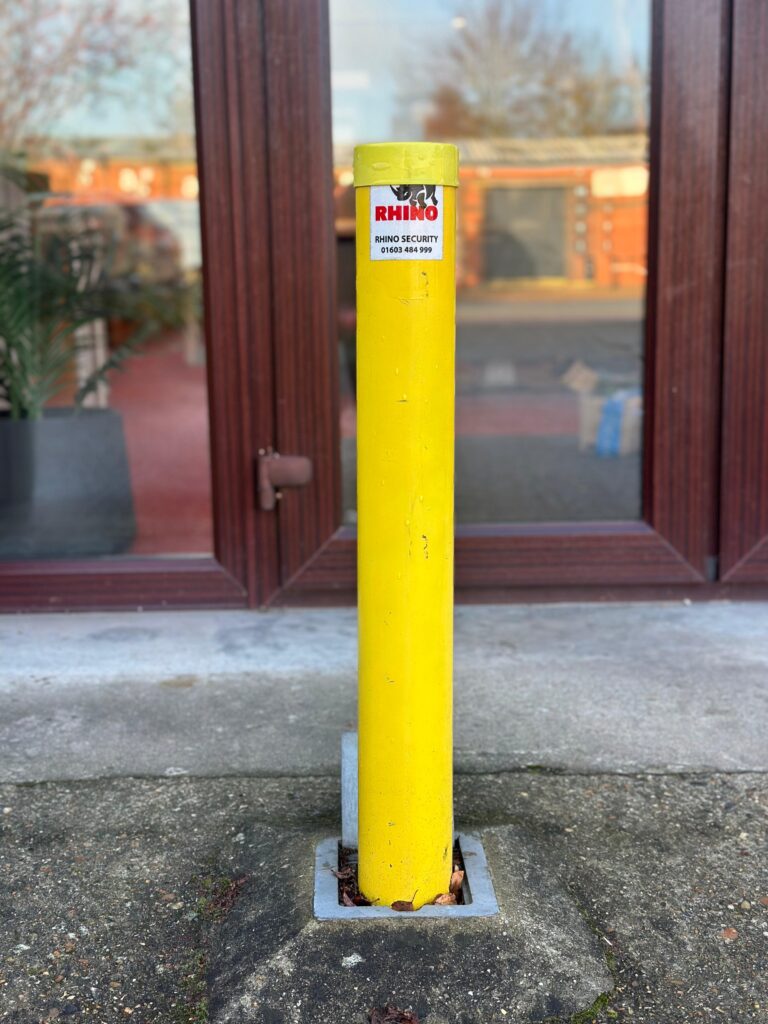
How Tall, How Deep and How Far Apart Should Driveway Bollards Be?
Driveway bollards are becoming an increasingly popular way to protect vehicles at home. However, many homeowners are unsure about the correct height, spacing and installation depth required to ensure they are both effective and practical.
In this guide, we answer some of the most common questions about driveway bollards to help you make an informed decision.
Specifications can vary depending on the type of bollard you choose, so careful consideration of height, spacing and foundation depth is essential to ensure long-term performance.
How tall should driveway bollards be?
The typical above-ground height for residential driveway bollards ranges from approximately 500mm to 900mm. Some heavy-duty or commercial models can extend to 1000mm or more, but for most domestic applications, this is not necessary.
Lower-profile bollards between 500mm and 600mm are commonly used for standard residential security posts.
They are sufficient to prevent a vehicle from being driven off a driveway, and will stop a car from passing without causing significant damage to the vehicle.
Taller bollards, usually around 700mm to 900mm above ground, offer greater visibility and can provide enhanced deterrence, particularly for larger vehicles such as vans or light commercial vehicles.
In high-risk or commercial environments, heights of up to 1000mm or 1200mm may be specified depending on the level of protection required.
When choosing the appropriate height, consider the type of vehicle you are protecting. A standard family car does not require the same visible deterrent height as a larger commercial vehicle.
Visibility is also important. A bollard should be clearly visible to drivers to avoid accidental impact. Reflective strips or high-visibility finishes can help improve awareness, particularly in low-light conditions.
There is no specific legal height requirement for driveway bollards in the United Kingdom. In most cases, bollards installed on private residential driveways do not require planning permission. However, if the bollard is positioned adjacent to a public highway or significantly alters access, it is sensible to check with your local authority. As a general guide, structures under one metre high next to a highway are unlikely to raise planning concerns.
Can bollards be raised and lowered?
Whether a bollard can be raised and lowered depends on its design.
Telescopic bollards sit inside a ground sleeve and lower fully into the surface when not in use. Once down, they are flush with the driveway so vehicles can pass over them easily. This makes them a popular choice for driveways.
When you need to secure the space, you simply lift the bollard into position and lock it in place using a high-security locking system.
Some models come with an assisted lift system, which makes them much easier to use. You can raise and lower the bollard with far less effort, which is helpful if you use it regularly.
For even more convenience, automatic rising bollards operate electronically. You control them with a remote, keypad or access system, so there is no need to leave your vehicle. They are often installed in commercial settings, but they also suit high value homes where vehicles come and go throughout the day.
Static bollards work differently. They are fixed permanently in place and cannot be lowered. Because they stay upright at all times, they provide constant protection. This makes them better suited to securing perimeters rather than driveways where regular vehicle access is required.
Telescopic bollards give you a strong balance of security, practicality and appearance. They help you protect your driveway without making everyday access difficult, and when lowered they sit neatly within the surface.
How far apart should driveway bollards be?
Correct spacing is critical to ensure bollards are effective. For vehicle restriction, bollards are typically spaced between 1.2 metres and 1.5 metres apart. This measurement is usually taken from the centre of one bollard to the centre of the next.
Spacing within this range prevents vehicles from passing between them while still allowing comfortable pedestrian movement.
Accessibility guidance, including BS 8300, recommends a clear gap of at least 1000mm between bollards to allow access for wheelchair users, prams and mobility aids.
In residential settings, maintaining a gap of around 1.2 metres usually satisfies both vehicle restriction and accessibility considerations. In higher-security environments, spacing may be reduced to approximately 1 metre.
However, spacing should always be considered alongside the width of the driveway, the size of the vehicles using it and the turning space required.
Installing bollards too closely can make daily access inconvenient, while spacing them too widely reduces their effectiveness.
A professional site assessment can ensure correct positioning and prevent unnecessary installation costs. Careful planning helps determine how many bollards are required and where they should be placed for maximum protection without compromising usability.
How deep does a bollard need to be buried?
The required installation depth depends on the bollard type and its intended level of security.
Residential telescopic bollards typically require excavation depths of between 700mm and 1000mm. This allows space for the ground sleeve and adequate concrete foundation, as well as drainage provision. Proper drainage is essential to prevent water accumulation, which can lead to corrosion or freezing in colder months.
Static bollards generally require foundation depths of approximately 450mm to 600mm, depending on their diameter and intended use. Impact-rated or security-tested bollards may require deeper reinforced foundations to achieve their performance rating.
Shallow-mount bollards are available in certain security-rated ranges and are designed to require less excavation, often under 500mm. These can be particularly useful where underground utilities are present or where excavation depth is restricted.
Before installation, checks must always be carried out to identify underground services such as gas, electricity, water or telecommunications cables. Striking underground utilities can be dangerous and costly.
Recommended bollard installation depths
| Bollard type | Typical depth required | Notes |
| Telescopic bollard | 700mm to 1000mm | Allows space for the ground sleeve, concrete base and drainage. Proper drainage helps prevent corrosion and freezing. |
| Static bollard | 450mm to 600mm | Depth depends on diameter and intended use. Security-tested models may need a deeper reinforced foundation. |
| Shallow mount bollard | Under 500mm | Designed to reduce excavation. Useful where underground services are present or the digging depth is limited. |
The importance of a proper foundation
The effectiveness of a bollard depends heavily on its foundation. A correctly specified concrete base ensures the bollard can withstand impact, remain stable over time and perform as intended.
Inadequate foundations can result in movement, lifting or structural failure, particularly under impact. This not only reduces security but can create safety hazards. Proper installation ensures durability, compliance and long-term reliability.
Professional installation also ensures correct depth, spacing and drainage, while avoiding underground services. This protects both the performance of the bollard and the validity of any product warranty.
Choosing the right bollard
When installing driveway bollards, getting the fundamentals right is essential. The correct height ensures visibility and deterrence. Appropriate spacing prevents vehicle access while maintaining usability.
Sufficient installation depth and strong foundations guarantee long-term performance. Choosing the right type of bollard ensures your driveway remains practical as well as secure.
If you are unsure which bollard is best suited to your property, Rhino Security can provide expert advice tailored to your driveway layout and security requirements. Proper planning and professional installation will ensure your bollards provide the protection your vehicle deserves.